02
Threshold Intelligence
Examine threshold-dependent behaviour, instability, and deployment-sensitive trade-offs before operational decisions are made.
Operational AI Assurance Platform
Ducaltus Enterprise provides an operational AI assurance environment with authenticated access, permission-aware workflows, persistent records, organisational context, and traceable governance activity for high-stakes AI deployment.
The Deployment Problem
Aggregate metrics can obscure subgroup disparities, conflicting assurance conclusions, threshold-sensitive behaviour, operational uncertainty, and governance conditions that matter when AI moves into real-world use.
Ducaltus provides an operational assurance layer around evaluation, helping organisations connect technical evidence with deployment readiness, accountable review, remediation, reassessment, and the evidence required to support later scrutiny.
Connected Assurance Lifecycle
Ducaltus treats assurance as a repeatable operational lifecycle rather than a single point-in-time assessment.
Bring relevant model, performance, and assurance evidence into a controlled assessment context.
Assess performance, fairness, subgroup reliability, and deployment-relevant conditions.
Review sensitivity, error trade-offs, and the stability of deployment conclusions.
Surface conditions requiring review, escalation, restriction, or additional evidence.
Support accountable deployment review and track remediation or other actions arising from assurance findings.
Preserve assurance evidence, governance activity, and reporting context for traceability and later review.
Repeat assessment following remediation, changed evidence, or altered deployment conditions.
Operational Platform
Ducaltus brings evaluation, operational review, governance activity, lifecycle management, monitoring, and reporting into a connected enterprise environment.
High-level operational visibility into the current assurance position.
Create, import, organise, and review deployment assurance investigations.
Review prior assurance context and maintain continuity across assessment activity.
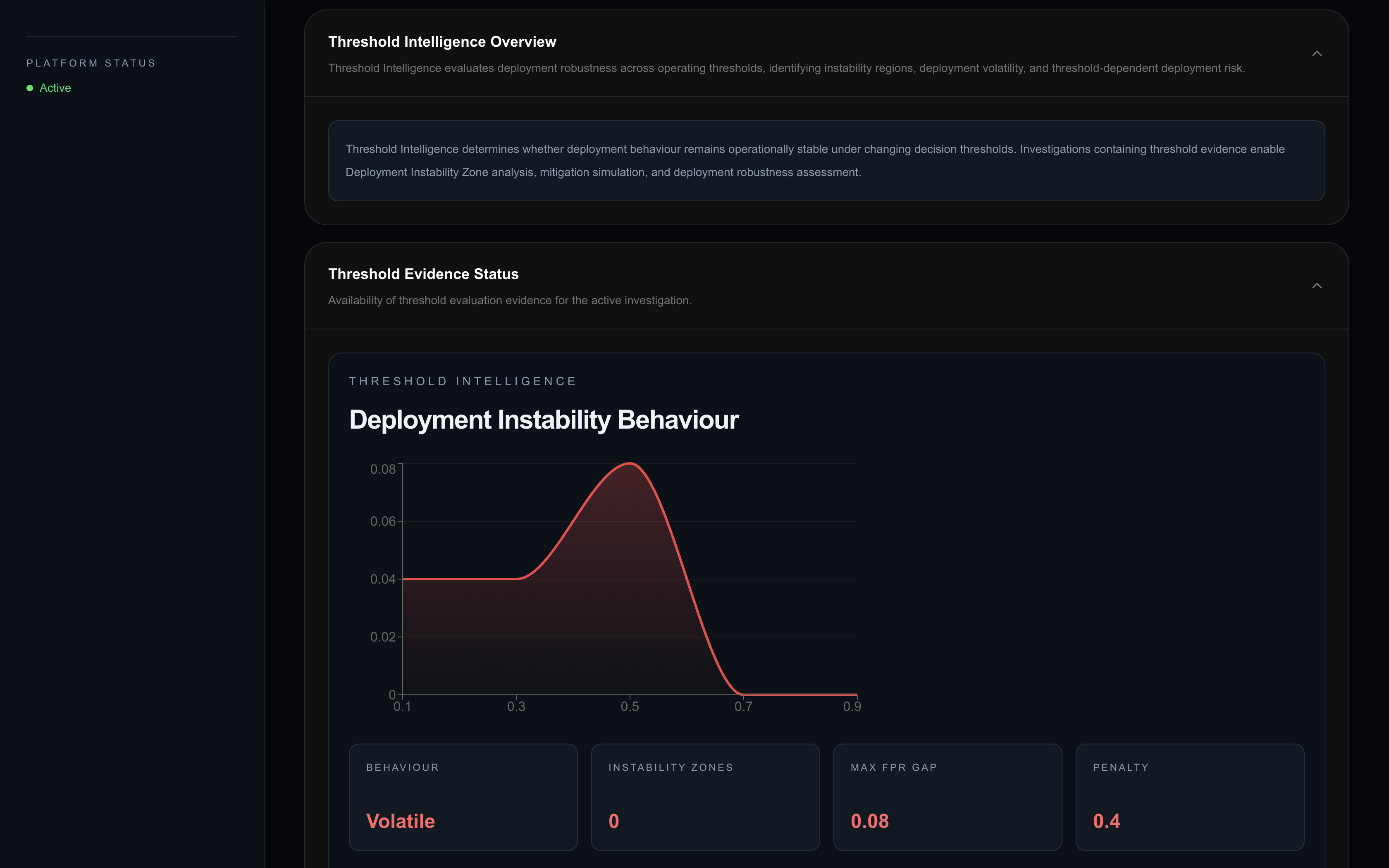
Review threshold-sensitive behaviour, stability, and deployment-relevant error trade-offs where supported by the evidence.
Review organisation-level governance conditions and assurance context.
Bring assurance findings, evidence, review, and authorised governance activity into a structured operational process.
Track progression, remediation, and reassessment across the assurance lifecycle.
Preserve operational and governance history to support traceability and later review.
Translate active assurance context into stakeholder-oriented reporting.
Manage organisational and project context supporting repeatable enterprise assurance activity.
Platform Demonstration
Follow a high-stakes AI evaluation from evidence ingestion through deployment intelligence, governance, monitoring, and executive assurance reporting.
Demonstration environment using synthetic evaluation data.
Inside the Platform
Ducaltus connects technical assurance evidence with governance, deployment control, continuous monitoring, and executive reporting across a single operational workflow.
01
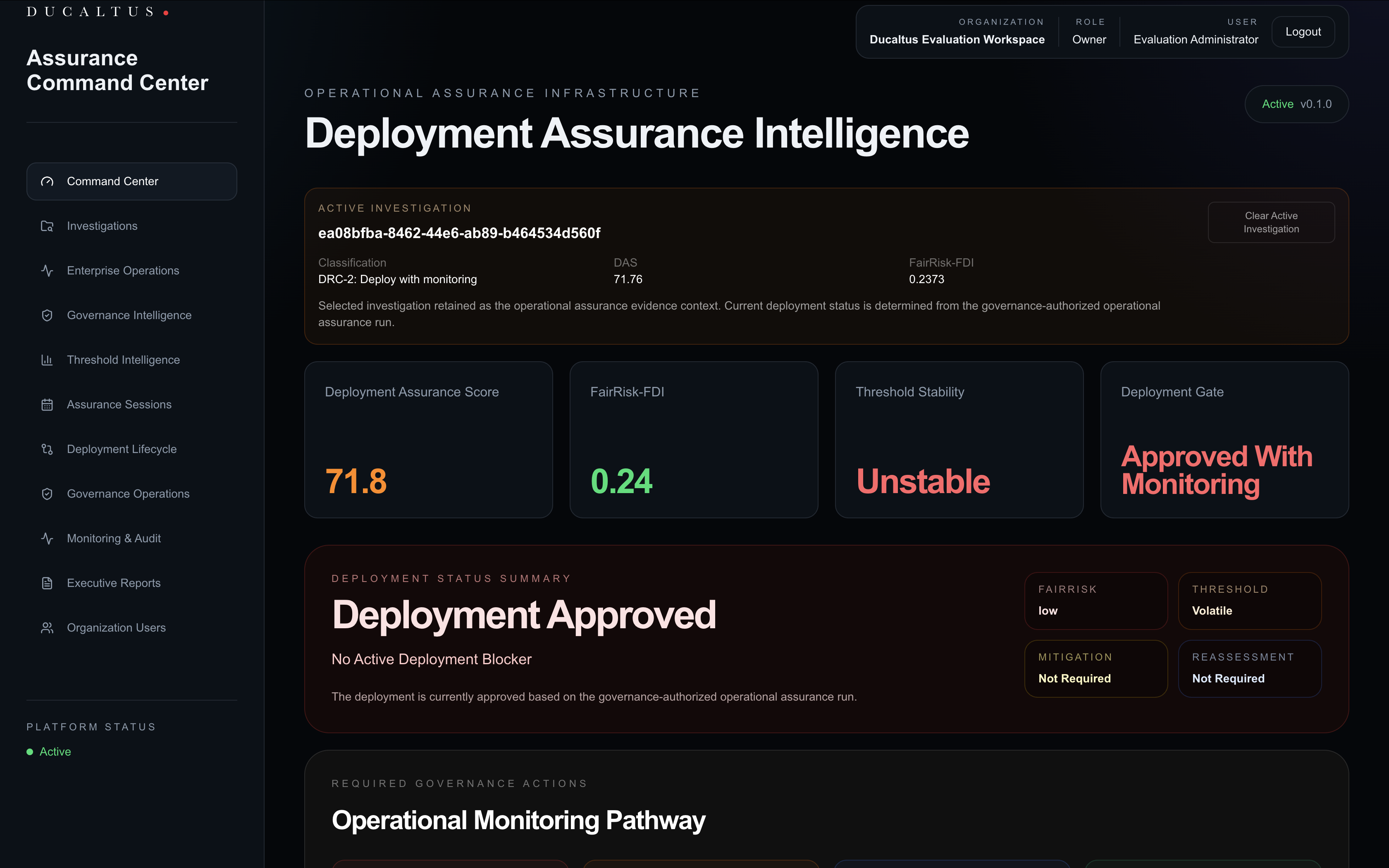
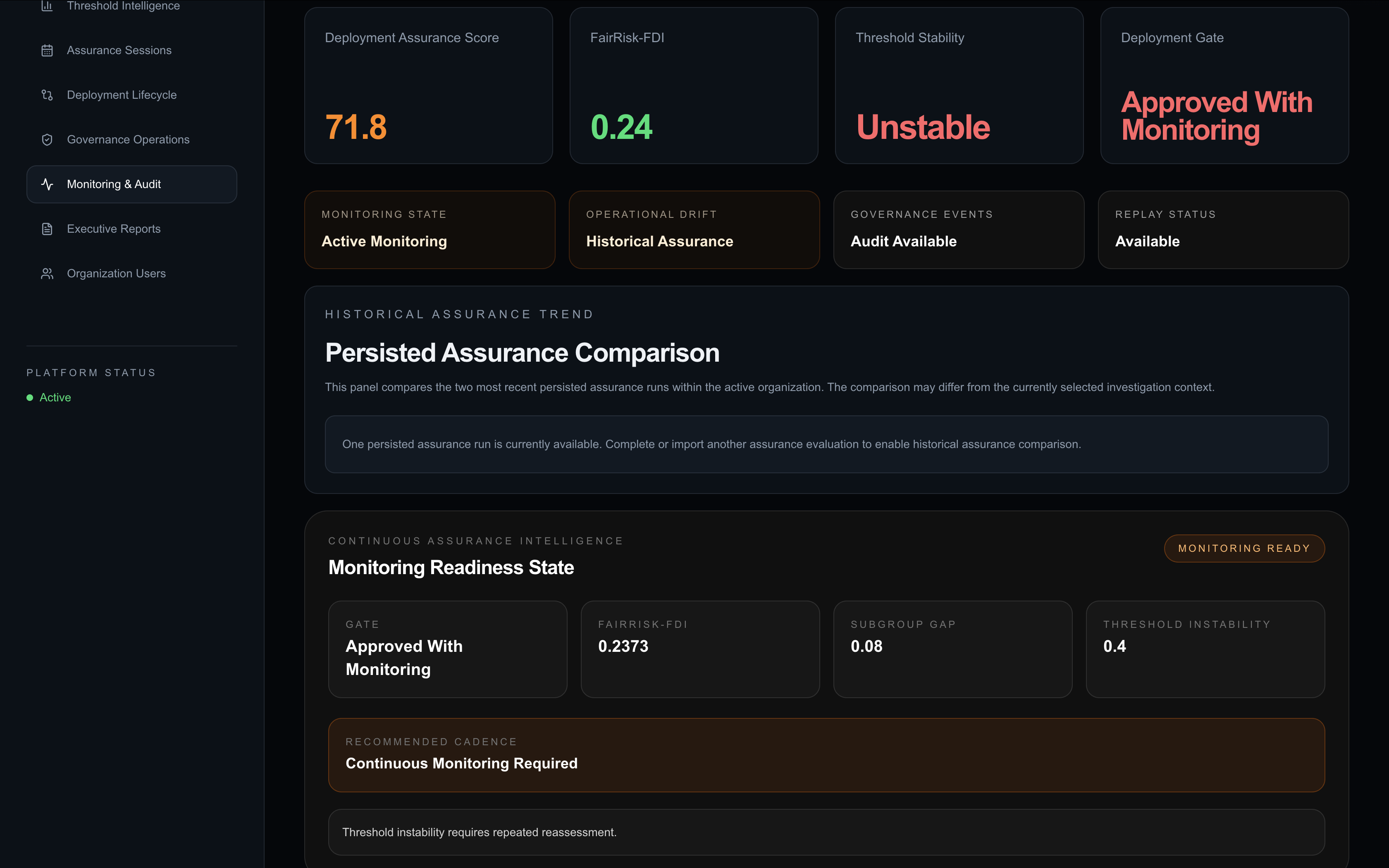
Bring deployment assurance, risk signals, threshold stability, governance state, and monitoring posture into a unified operational view.
02
Examine threshold-dependent behaviour, instability, and deployment-sensitive trade-offs before operational decisions are made.
03
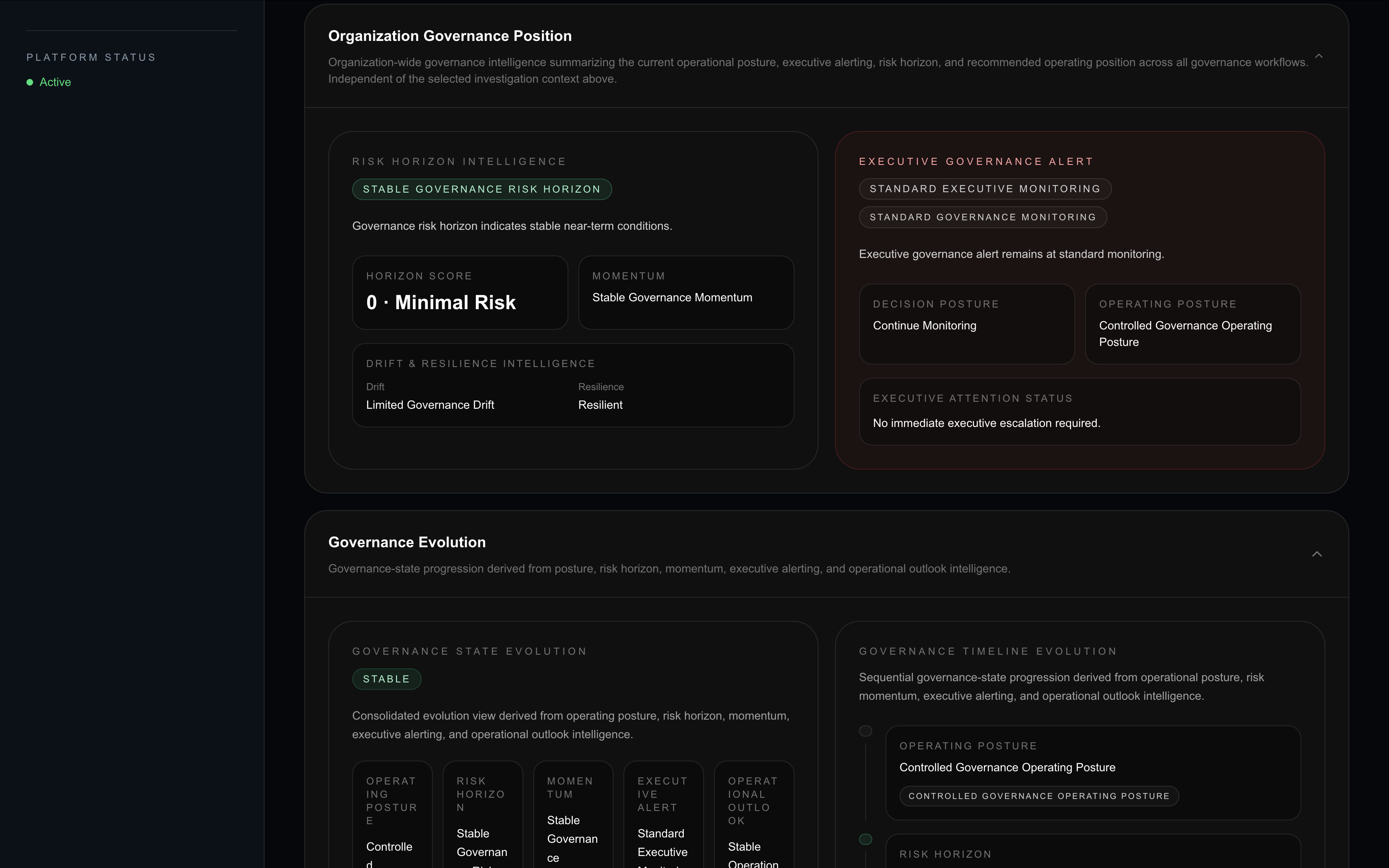
Translate assurance and operational signals into governance posture, risk-horizon intelligence, and executive attention.
04
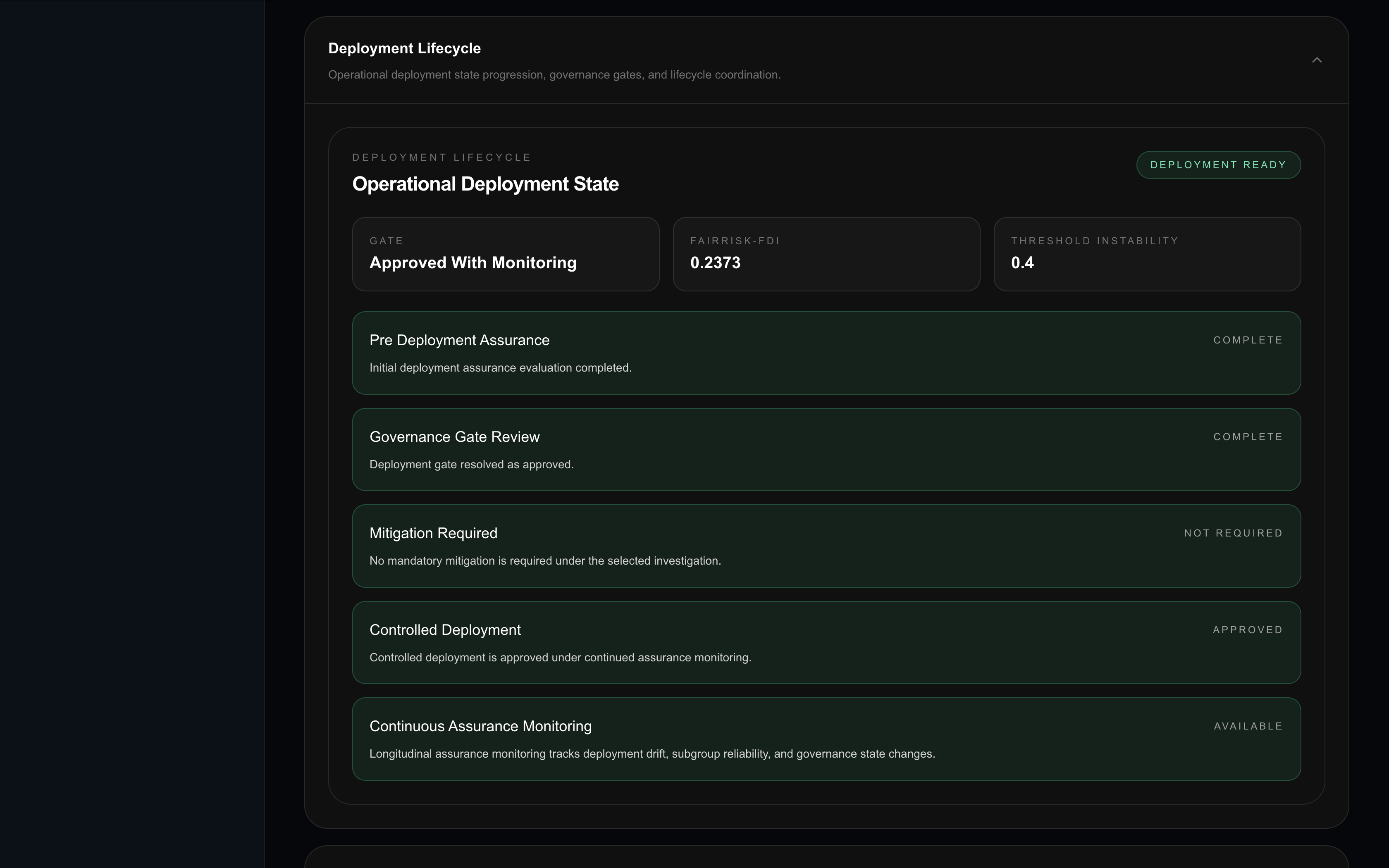
Connect pre-deployment assurance, governance review, controlled deployment, and continuing assurance within a traceable lifecycle.
05
Maintain assurance after deployment through monitoring readiness, reassessment signals, historical evidence, and audit-oriented review.
06
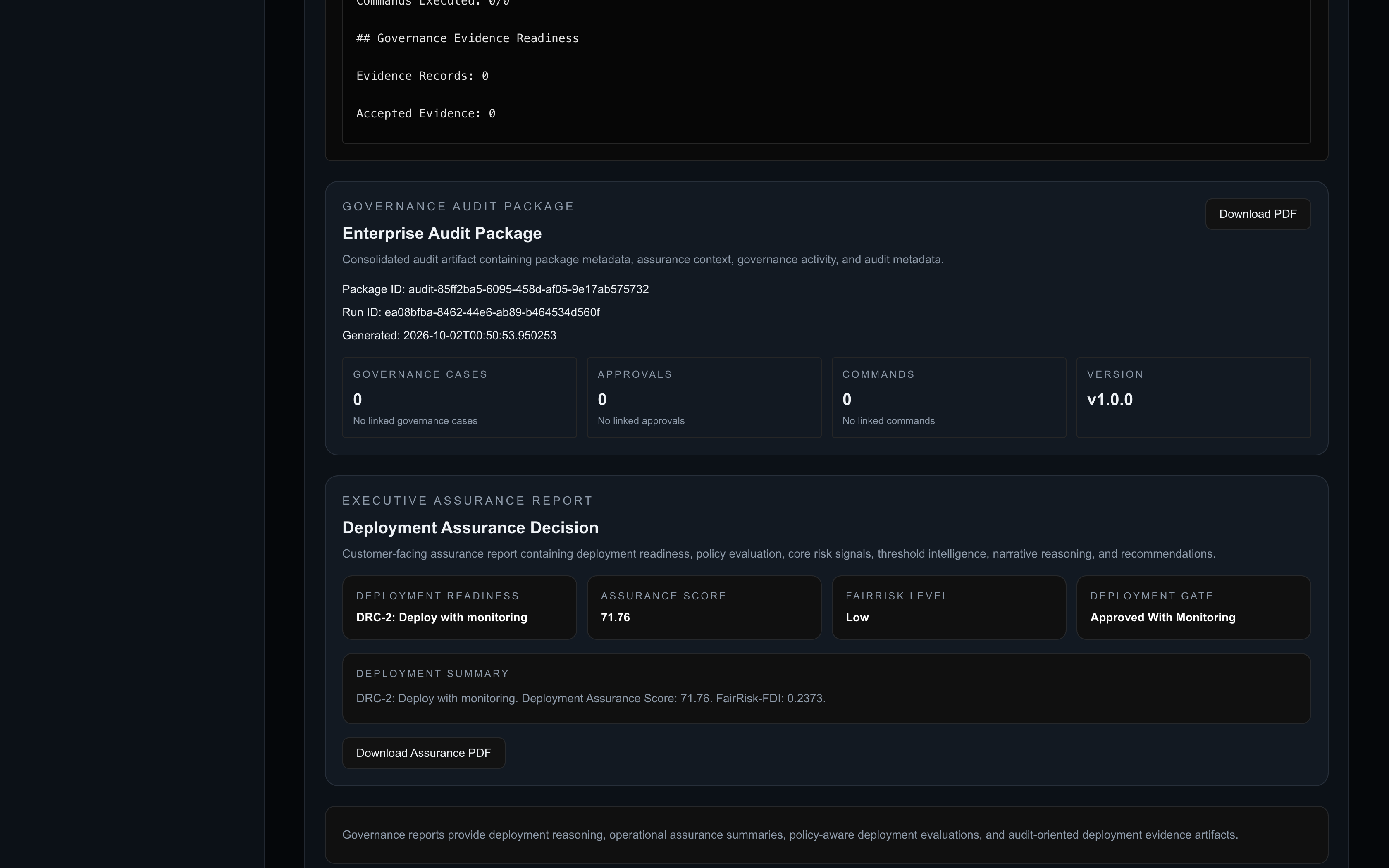
Convert assurance outcomes into deployment decisions, executive summaries, and downloadable evidence artefacts for stakeholder review.
Connected Intelligence
Connect performance, fairness, subgroup reliability, and deployment-oriented evidence within structured assurance review.
Examine how deployment conclusions and error trade-offs behave as operating thresholds change.
Support review, escalation, restriction, reassessment, and accountable deployment-state management.
Support structured examination of evidence, assurance findings, reasoning, and historical context.
Connect assurance findings, remediation, reassessment, and changing deployment conditions across the operational lifecycle.
Translate assurance findings into decision-oriented information for oversight and deployment stakeholders.
Preserve relevant governance events, evidence, and decision records to support traceability and review.
Governance & Human Oversight
Assurance findings can move into structured governance review, remediation, reassessment, reporting, and evidence preservation rather than ending as an isolated technical result.
Ducaltus supports governance and deployment decision-making; it does not replace authorised human review, organisational accountability, or decision authority.
Enterprise Foundations
Enterprise workflows are accessed through authenticated user accounts.
Operational capabilities are controlled according to authorised user responsibilities.
Assurance activity is organised within authorised organisation and project contexts.
Relevant assurance, governance, and deployment records support repeatable review over time.
Governance activity, evidence, and reporting are designed to support later review and audit.
Persistent state and operational artifacts support continuity across application restarts and redeployments.
Where Ducaltus Fits
Platform Status
The Ducaltus V1 core platform is deployed in production following platform build, hardening, deployment, and production validation.
Current activity is focused on controlled evaluation, pilot readiness, external validation, strategic partnerships, and commercialisation.
Evaluation & Engagement
Engagement can begin with a scoped discussion of the AI system, deployment context, assurance questions, and available evidence, followed by a controlled platform evaluation and, where appropriate, a pilot.
Detailed operational and technical documentation is available to appropriate customers, evaluators, and partners under suitable confidentiality arrangements.